|
 |

| |
 |
 |

|
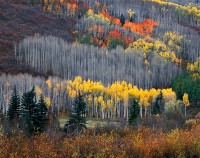
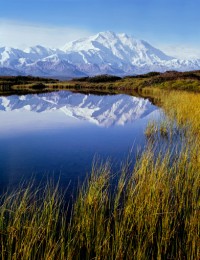
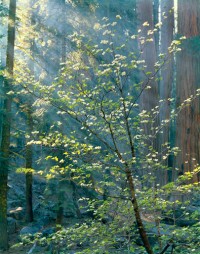
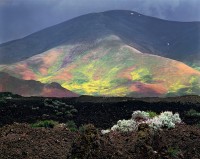
Philip Hyde helped lead in the establishment of color landscape photography as a fine art. He influenced the direction of nature photography as he participated in more environmental campaigns than any other photographer of his time. He contributed to the birth of the modern environmental movement as one of the primary illustrators of the groundbreaking Sierra Club Exhibit Format Series. His photographs helped protect scenic wild lands such as Dinosaur National Monument, The Grand Canyon, The Redwoods, Canyonlands and many other national parks, seashores and wilderness areas.
Born and raised in San Francisco, Hyde lived for 50 years in the house he built in the Sierra Nevada Mountains of California with his late wife Ardis. Ardis worked at the California School of Fine Arts where Hyde studied under Ansel Adams, Minor White, Edward Weston, Imogen Cunningham, Lisette Model and Dorothea Lange. Ardis also supported Hyde's early career by teaching kindergarten for 12 years and assisting in the photography business.
Hyde's work has appeared in more than 75 books and 100 major publications including The New York Times, Audubon, Life, National Geographic, Aperture, and Newsweek. His work has been exhibited in over 100 of the finest venues including The Smithsonian Institute, Time-Life Gallery, Ansel Adams Gallery, George Eastman House, California Academy of Sciences, Center for Creative Photography, Massachusetts Institute of Technology, San Francisco Museum of Modern Art and The Sierra Club Gallery, New York City. The North American Nature Photography Association honored him with a lifetime achievement award in 1996. He received the California Conservation Council's Merit Award in 1962 and the Albert Bender Grant in 1956. |

|
|
|